About this course
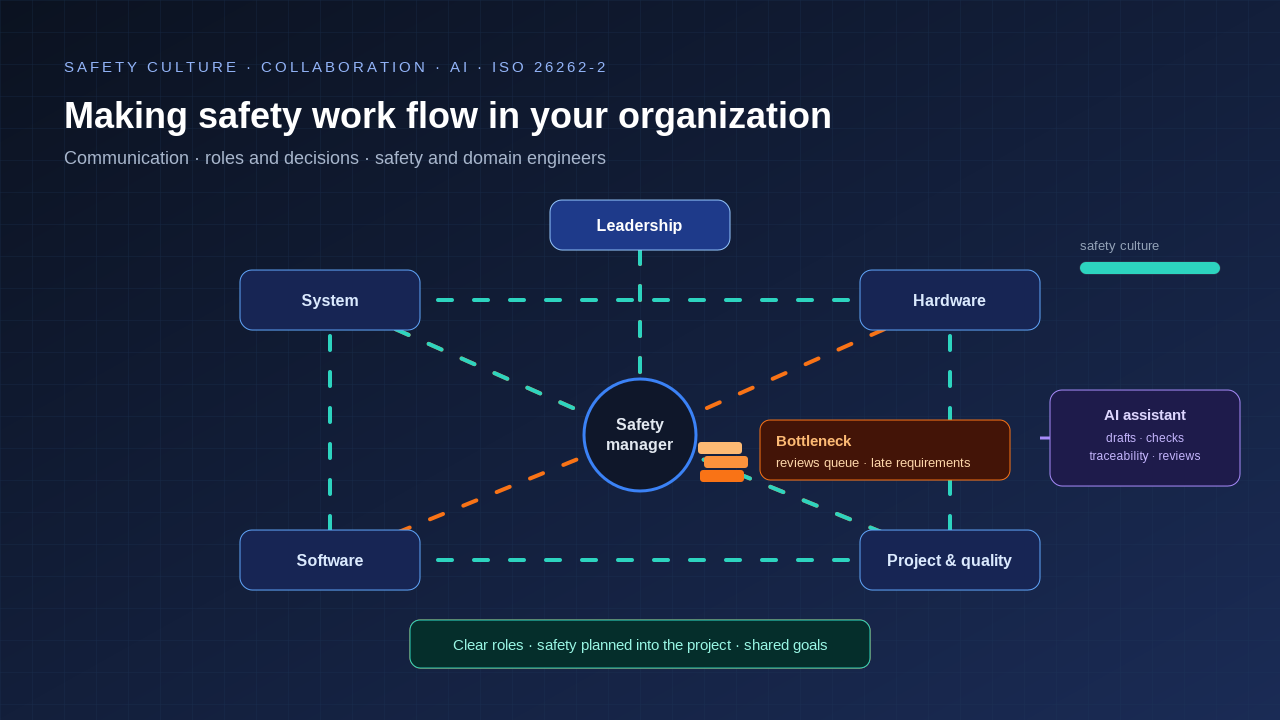
Most problems in functional safety projects are not technical. Safety requirements arrive too late or too abstract, domain engineers see safety work as paperwork, the safety manager becomes the bottleneck, and the safety culture described in the process does not reach daily development.
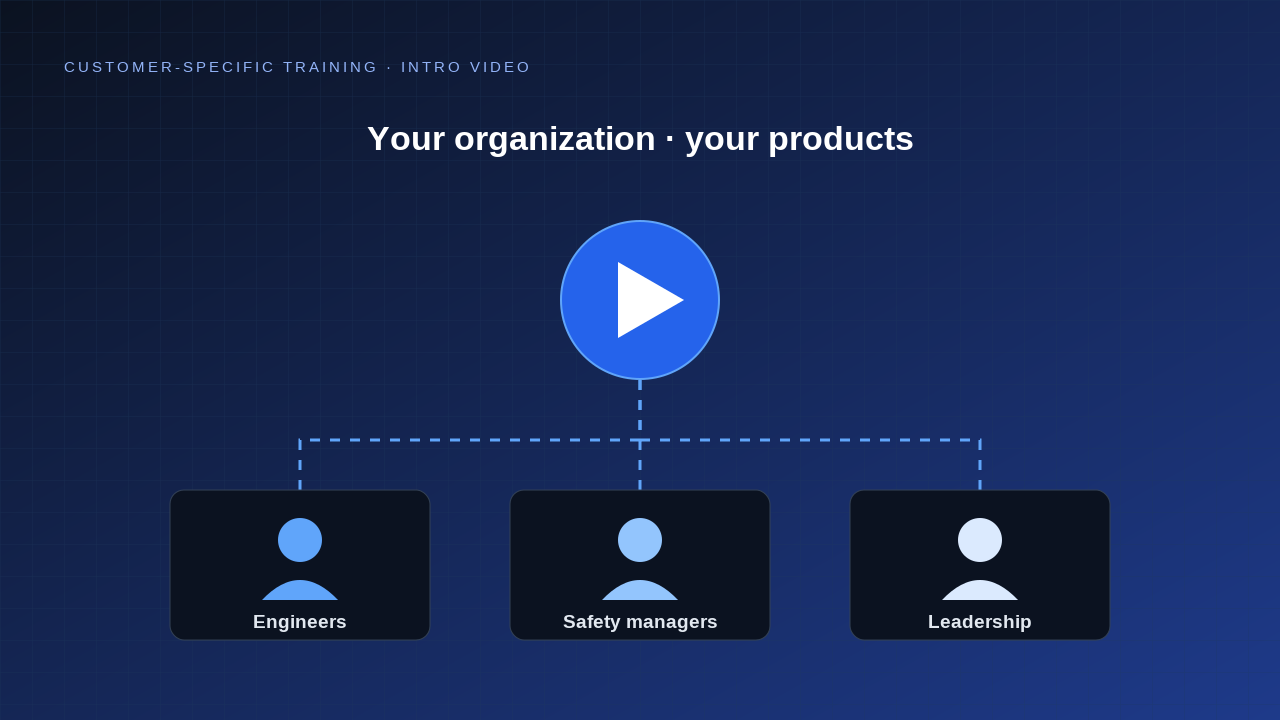
This workshop is adapted to your organization. Beforehand, we run short interviews and a survey across safety, system, hardware, software and project roles, and review how safety activities currently run in one of your projects. The workshop then works on your real friction points, taking into account your culture, structure and way of working.
Where it fits your organization, the workshop also covers AI transformation of the safety workflow: using AI assistants and automation to draft and check work products, keep traceability, prepare reviews and share knowledge, so that communication runs faster and the safety team is no longer the bottleneck, while keeping the use of AI tools under control.
The result is a concrete strategy: who decides what, how safety work is planned into the project, how safety and domain engineers work together, and how the safety culture expected by ISO 26262-2 becomes visible in everyday work.
Who should attend
- Functional safety managers and engineers
- Project and engineering managers
- System, hardware and software leads
- Quality and process owners
- Leaders responsible for safety culture
What you will be able to do
- Identify the communication bottlenecks and conflicts that slow down your safety activities
- Understand the viewpoints and constraints of both domain engineers and safety engineers
- Clarify roles, responsibilities and decision paths for safety work in your projects
- Plan safety activities into the project instead of running them in parallel
- Translate the safety culture expectations of ISO 26262-2 into everyday practice
- Identify where AI assistants and automation can remove bottlenecks, and how to use them responsibly
- Leave with an action plan that fits your organization's culture and structure
Course program
- Preparation: Interviews and SurveyBefore the workshop: short interviews and an anonymous survey across roles, and a review of the safety plan and work products of a running project.
- Where Safety Work Gets StuckMapping how safety work really flows and where it stops: late requirements, review queues, unclear ownership.
- Safety and Domain EngineersTypical conflicts and their causes, and how to make safety work an engineering support rather than paperwork.
- Roles, Decisions and EscalationResponsibilities for safety activities, decision rights, and escalation paths that do not block the project.
- Planning Safety into the ProjectTailoring, timing and effort of safety activities, aligned with the development plan and release milestones.
- Safety Culture in PracticeWhat ISO 26262-2 expects, signs of a good and a weak safety culture, and the role of leadership.
- AI in the Safety WorkflowWhere AI assistants and automation help: drafting and checking work products, traceability, review preparation and knowledge sharing; and how to keep AI tools under control, including tool confidence according to ISO 26262-8.
- Your Action PlanPrioritized measures with owners, agreed with the participants, and a date for the follow-up review.