About this course
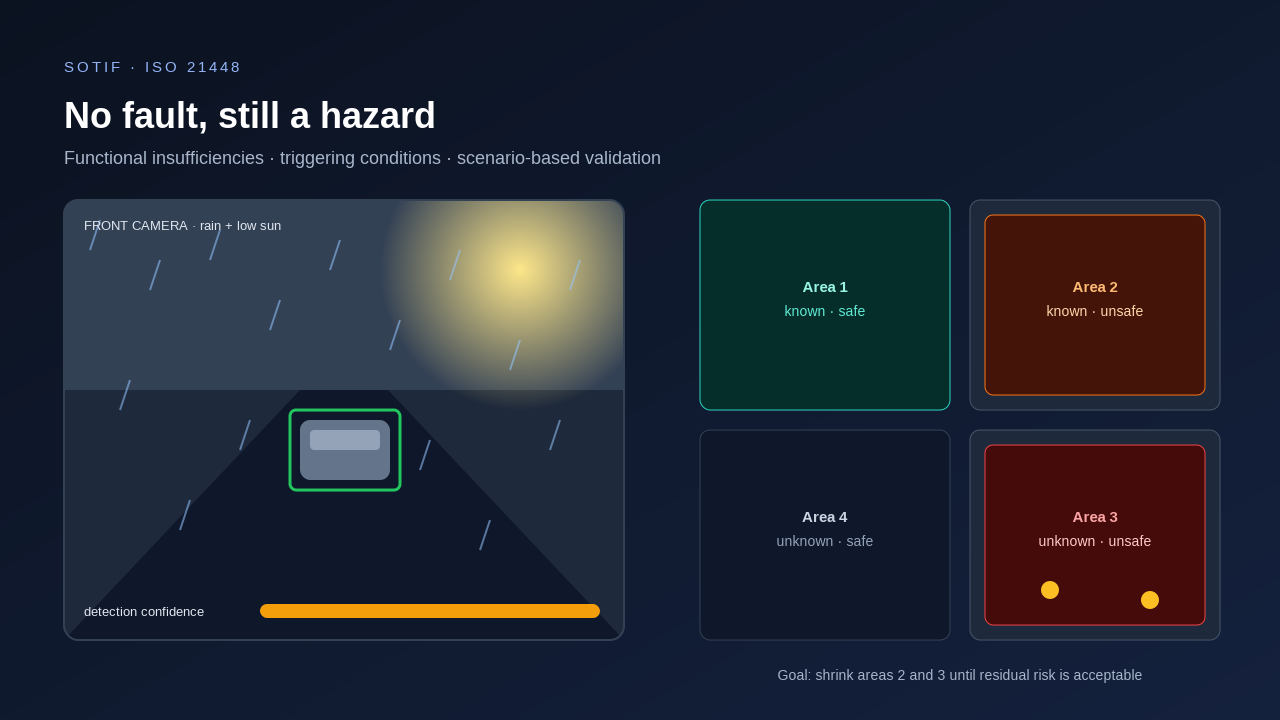
ISO 26262 addresses hazards caused by malfunctions of E/E systems. ISO 21448:2022 addresses hazards that occur without any fault: insufficiencies of specification or performance, for example a camera that misses an object in rain and low sun, and reasonably foreseeable misuse.
This two-day workshop takes one ADAS function through the SOTIF activities: hazard identification, triggering conditions, functional modifications, and the verification and validation strategy that reduces the known and unknown unsafe scenarios until the residual risk is acceptable.
Who should attend
- ADAS and automated driving system engineers
- Perception, sensor fusion and planning engineers
- Functional safety and SOTIF engineers
- Validation and test managers
What you will be able to do
- Explain the scope of ISO 21448 and how it complements ISO 26262
- Identify hazards from functional insufficiencies and foreseeable misuse
- Identify and evaluate triggering conditions
- Define acceptance criteria and validation targets
- Build a scenario-based verification and validation strategy
- Plan operation-phase monitoring of SOTIF-related field events
Course program
- SOTIF and ISO 26262Hazards with and without faults, scope of ISO 21448:2022 and the joint safety argument.
- Specification and DesignSpecifying the intended functionality, the ODD and the system architecture with SOTIF in mind.
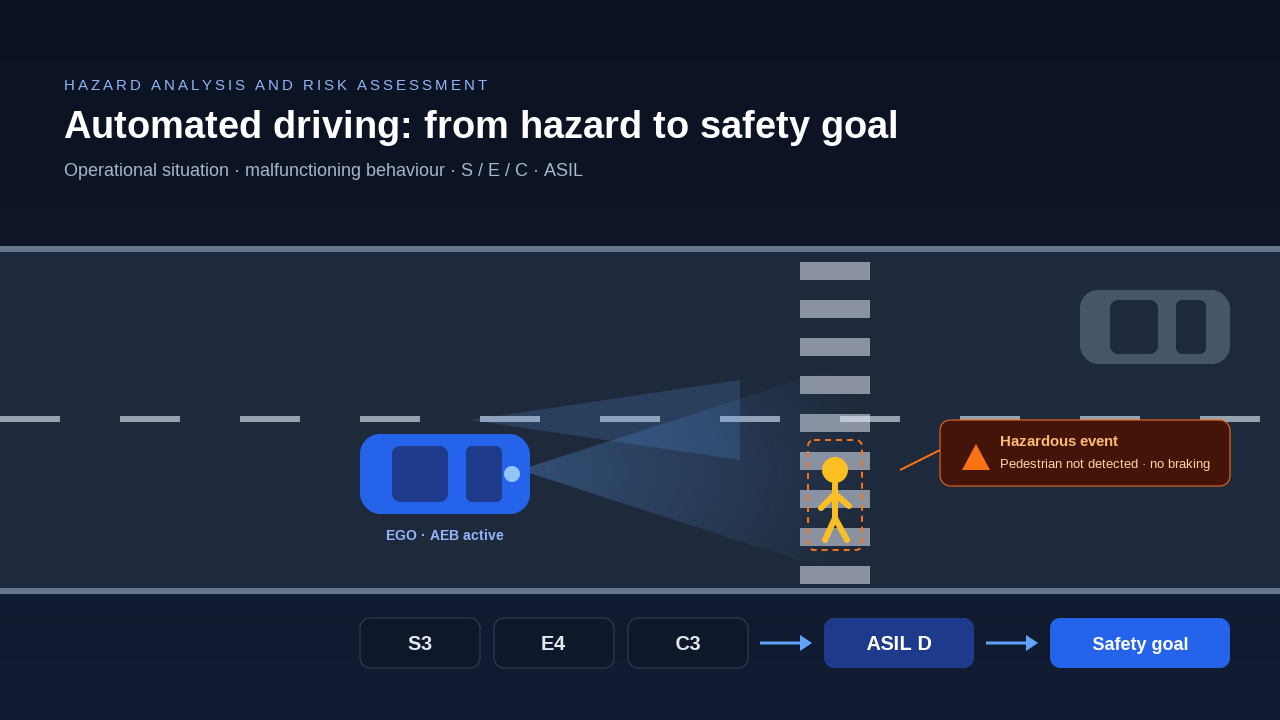
- Hazard Identification and Risk EvaluationHazardous behaviour, reasonably foreseeable misuse and acceptance criteria.
- Triggering ConditionsFunctional insufficiencies of sensors, algorithms and actuators, and the conditions that trigger them.
- Functional ModificationsMeasures that improve the function or restrict its use when insufficiencies cannot be removed.
- Verification and ValidationKnown and unknown scenarios, the four SOTIF areas, validation targets and test strategy.
- Operation PhaseField monitoring, SOTIF-related events and feedback into the development.
- ExerciseSOTIF analysis of an example ADAS function.