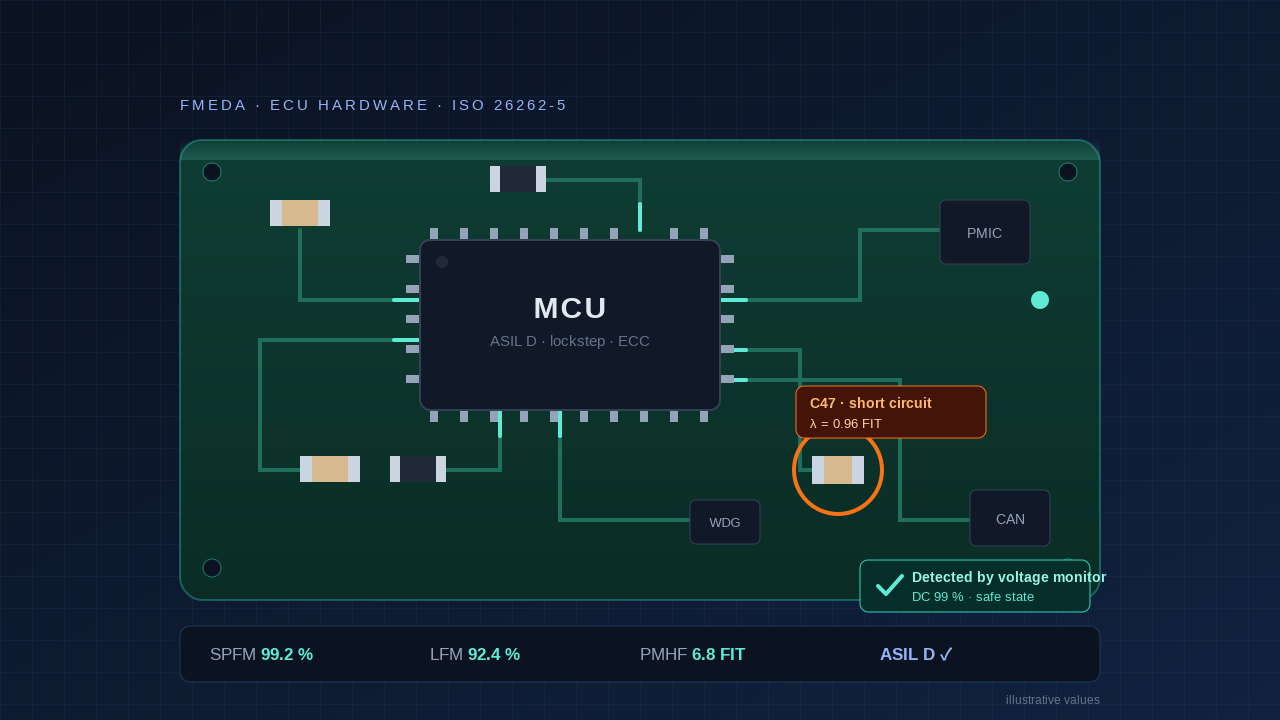
About this course
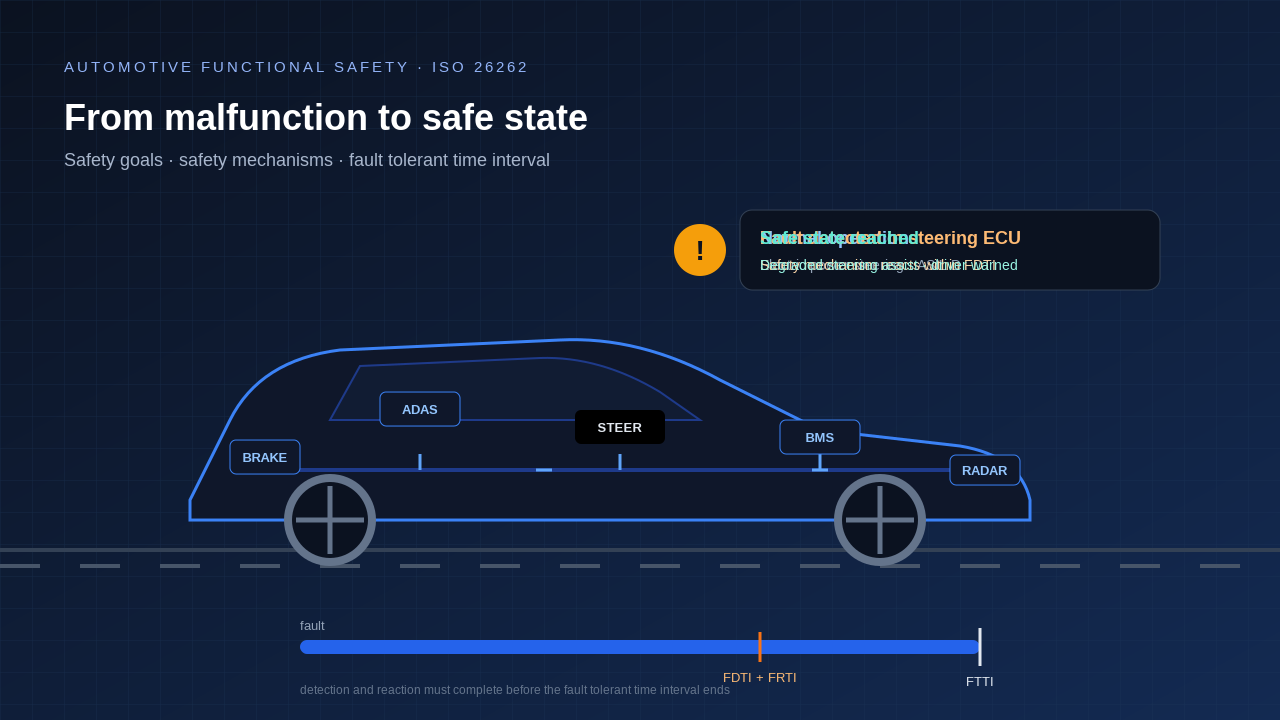
Your engineers bring a real circuit; two days later they leave with its FMEDA. The workshop follows ISO 26262:2018 Part 5 or IEC 61508, from failure modes and fault classes to the hardware architectural metrics and the evaluation of safety goal violations due to random hardware failures.
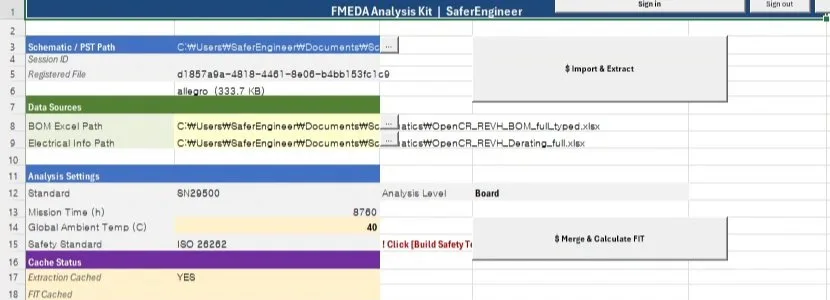
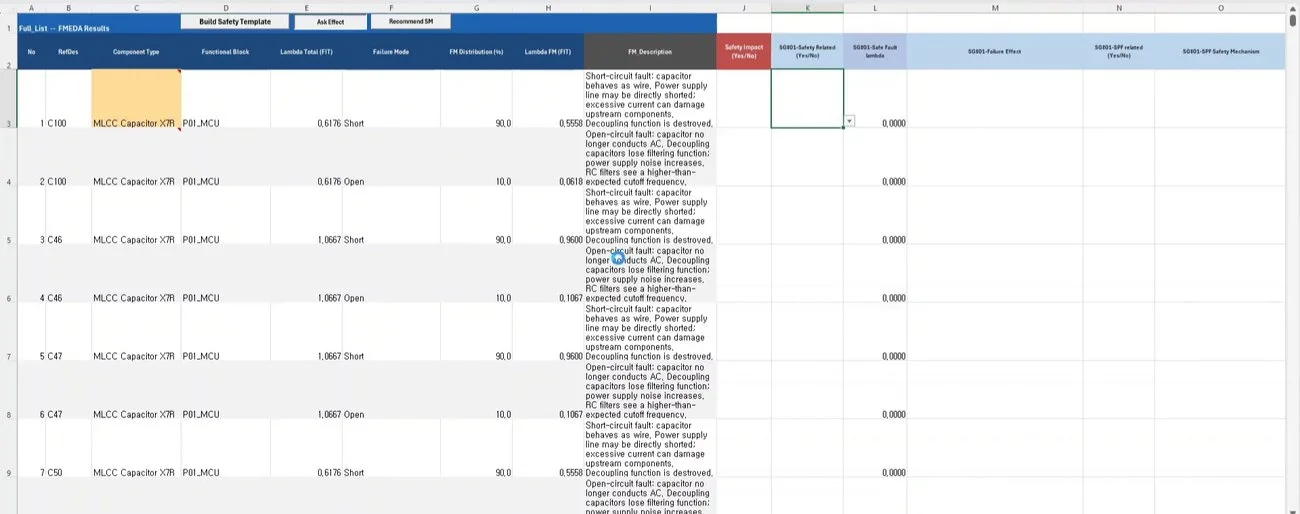
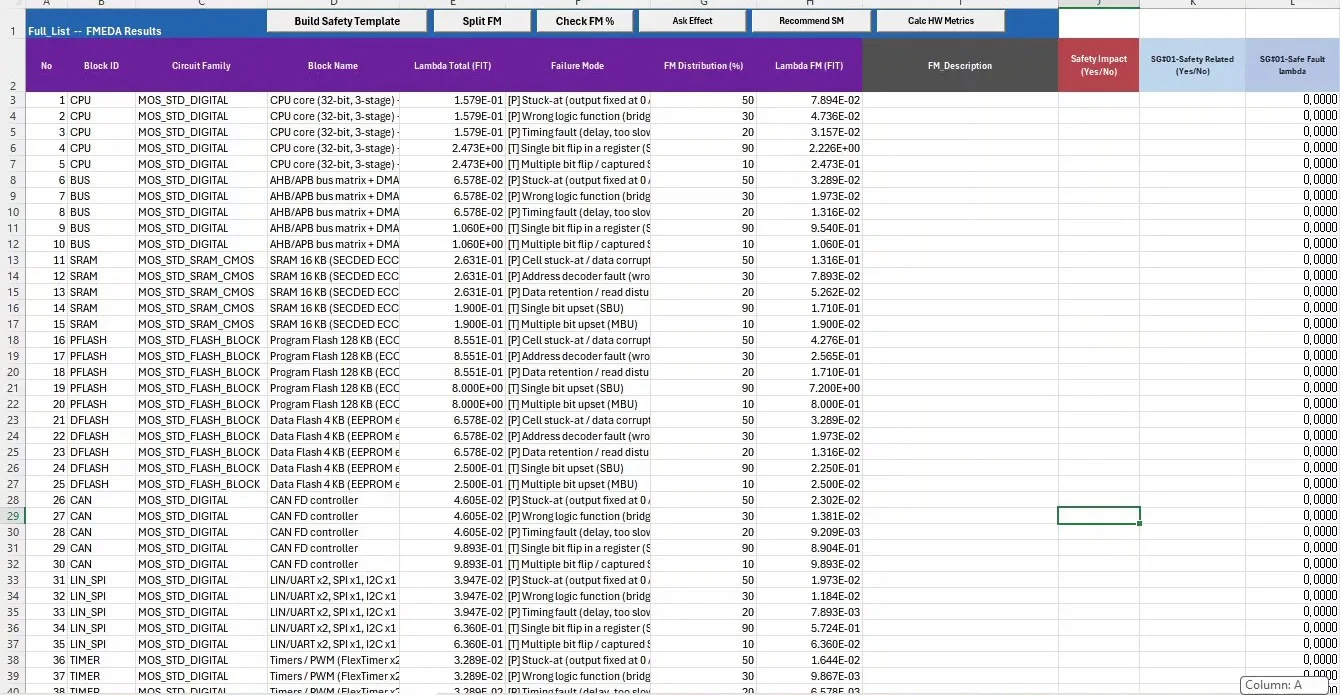
Participants do the analysis themselves, with an experienced functional safety engineer at their side. Video guides walk through each step, and the SaferEngineer FMEDA automation tool takes over the repetitive work, such as BOM import, failure mode assignment and FIT calculation, so that the time goes into the engineering decisions.
The emphasis is on the mistakes that most often make an FMEDA fail an assessment, on improving the design where the metrics fall short, and on keeping the existing design wherever its diagnostic coverage is already sufficient.
Who should attend
- Hardware engineers
- Functional safety engineers
- Functional safety managers
- Functional safety assessors
- OEM, Tier-1 supplier and semiconductor personnel
What you will be able to do
- Position the FMEDA among the hardware safety analyses of ISO 26262 and IEC 61508
- Assign failure modes and classify faults as safe, single-point, residual or latent
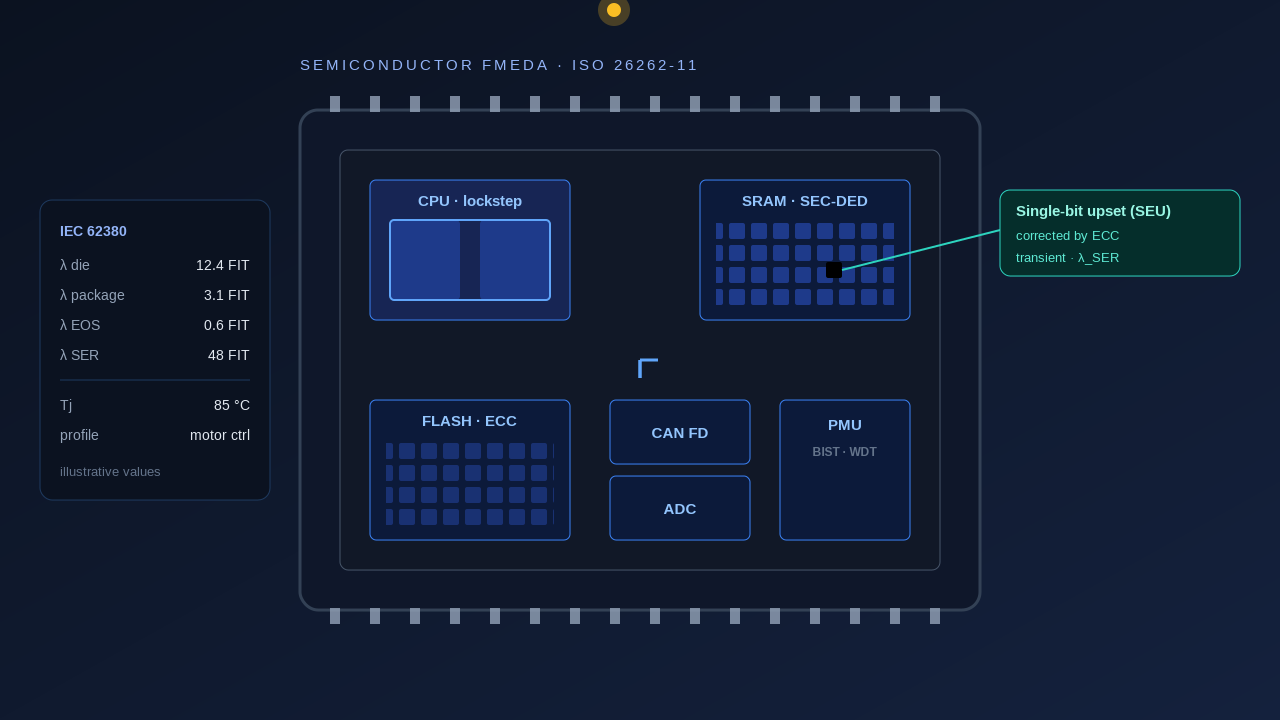
- Derive failure rates (FIT) from SN 29500, IEC 61709 or IEC 62380 with a suitable mission profile
- Claim diagnostic coverage with a defensible justification, including safety mechanisms already in your software
- Calculate SPFM, LFM and PMHF and decide what to change when a target is missed
- Use the safety manuals of MCUs, ASICs and other complex ICs correctly
- Leave with a reviewed FMEDA of your own circuit
Course program
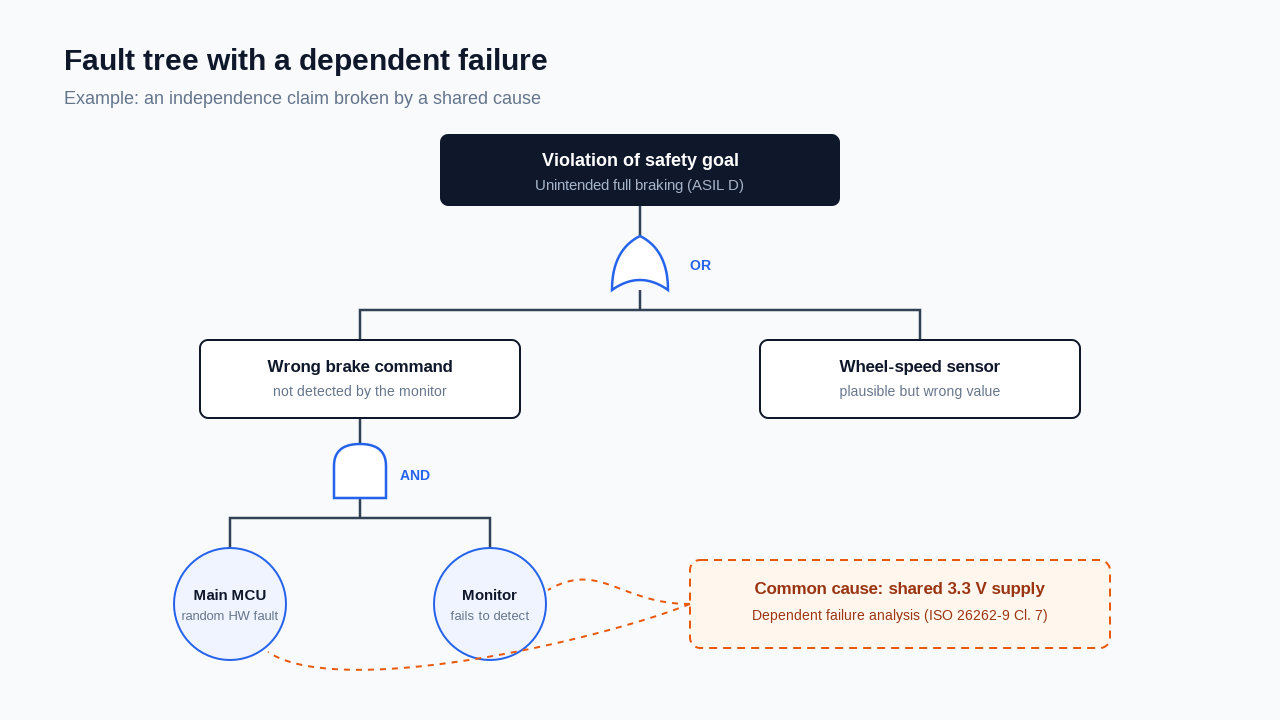
- Where the FMEDA FitsHardware safety analyses under ISO 26262-5 and IEC 61508, and the links to the quantitative FTA and the DFA.
- Failure Modes and Fault ClassesFailure modes per component type; safe, single-point, residual and latent faults; what a safety mechanism must achieve.
- Failure RatesSN 29500, IEC 61709, IEC 62380 and vendor data; mission profile, temperature and stress factors.
- Diagnostic CoverageClaims based on ISO 26262-5 Annex D and how to justify them; reviewing the safety mechanisms already in your software before changing the design.
- SPFM, LFM and PMHFCalculating the metrics, the targets per ASIL, and turning a missed target into a concrete design change.
- Complex ICsMCUs, ASICs and other complex ICs: safety manuals, assumptions of use, and the interaction with your software.
- Automating the FMEDAThe SaferEngineer FMEDA template and automation tool: BOM import, failure mode libraries, safety mechanisms and reports.
- Your Circuit, Your FMEDACompleting the FMEDA of your own circuit (or an example automotive ECU) and reviewing it together.
What you will work with